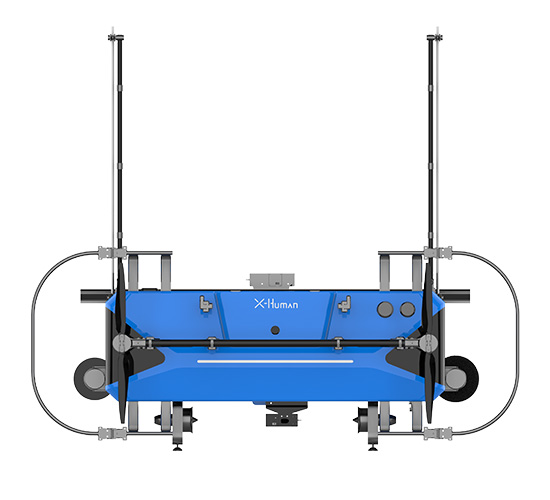
Introduction: Regional cleaning equipment distributors can evaluate a low-rise facade cleaning robot line by matching product scope, verified manufacturer evidence, and wholesale support to the exterior-cleaning requests already coming from facility management customers.
Regional cleaning equipment distributors add a facade line when facility management customers ask for exterior work that can be scheduled like other cleaning services. Your catalogue may already cover floors, carpets, washrooms, and pressure washing. The gap appears when an FM customer asks how to keep glass, stone, or aluminium-plastic panels above the ground floor clean without booking a rope access crew for every visit. That is a portfolio decision: does a low-rise curtain wall cleaning robot deserve shelf space, and does the manufacturer behind it provide enough range, parts, and technical backup to sell and support it locally?
Facility management customers judge exterior cleaning by cost per cycle, schedule fit, and risk near the building. IFMA benchmarking reports show that exterior maintenance competes for budget with other asset needs, so anything that shortens a wash cycle or takes a crew off ropes gets attention. Service robot adoption has been climbing steadily, as the International Federation of Robotics documents. Distributors that already sell automation into FM accounts often receive facade requests first. The commercial appeal sits in the low-rise band the J1 SE covers. For many regional markets, the 2 to 15 floor band—often ten to fifteen storeys in commercial properties—is the practical entry point because suspended platforms and rope access carry high setup costs relative to the glass area. A low-rise window cleaning robot can handle that band with remote operation by property staff, which makes the category a stockable line rather than a one-off project. The same model serves shopping malls, office blocks, hotels, exhibition centres, airport terminals, and internal atriums, so one unit can cover a wide spread of local customers. The J1 SE brings the line into focus with 30 m climbing height, 432 ㎡/h coverage, a 48V 51AH battery, a 40L external tank, and 5 mm gap crossing. The external tank and spray cleaning suit sites without a recirculating water source, while wet cleaning with the tank can fit customers tracking water use under sustainable operations programmes such as those published by the World Green Building Council.
A building cleaning robot manufacturer with a broad facade range gives distributors more than one product to quote. Customers move from a 20 m retail facade to a 90 m tower to a rooftop PV array, and every gap in your catalogue can send them to another supplier. X-Human's range covers high-altitude models such as K3 and LINGFENG YS-1, obstacle-crossing Y3 and S1 units, the low-rise J1 SE, and the Mini Flyer X3 for smaller window work, plus G1 and G2 photovoltaic cleaning robots. One supplier relationship, one spare-parts conversation, and one technical contact can answer most exterior questions an FM account brings to your business.
Starting a channel with the low-rise unit is sensible because it covers common regional commercial buildings and avoids the economics of rope access. The value of a broader line appears in the second and third customer conversation, when a property portfolio includes taller towers or facades with deep structural features that a 5 mm gap limit rules out. Being able to step a customer up to an obstacle-crossing or high-altitude model helps you keep the account and act as an application advisor.
The manufacturer holds 200+ IP items and 160+ authorized patents, and has taken part in drafting industry standards, alongside project experience in 20+ countries and 200+ project cases. For a distributor competing with resellers, these facts give FM buyers engineering evidence, standards participation, and overseas installations to review. Use these references in presentations; local sales will depend on your demonstrations, pricing, and follow-up.
A property quote covers one facade, access method, and schedule. Distributor support has a wider scope: model-to-customer fit, demonstration material, technician training, and consumables for every machine you sell. A window cleaning machine supplier should be ready to answer those questions. X-Human maintains a Wholesale Wall Cleaning Robots entry with catalogue material, video cases, and a robot-versus-rope-access cost comparison for distributor use. Service planning deserves as much attention as the machine itself. Brushes, nozzles, batteries, and tanks are the parts distributors should plan to stock so units stay in service. Ask for a spare-parts list mapped to the models you plan to stock, confirm what training comes with an initial order, and agree how technical questions reach an engineer rather than a general inbox. Clear consumables support helps you give local FM customers a practical response on parts and service. Commercial terms belong on the table early because they shape how you build the local business case. Confirm minimum order quantity, wholesale price tiers, lead time, warranty length, territory, and any exclusivity arrangement in writing before you sign an agency agreement. A practical first step is to request the current catalogue, the wholesale price schedule, and the spare-parts list for the models you intend to carry, then plan a demonstration around one local building facade.
Low-rise facade robots fit naturally into a regional cleaning portfolio because they answer a question FM customers already ask: how do we clean the exterior without a rope crew on site every cycle. The J1 SE's 30 m climbing height, 432 ㎡/h coverage, 40L external tank, and 48V 51AH battery provide a clear specification set for low-rise work. A broad facade line, 160+ authorized patents, and 200+ project cases give you supporting material for distributor discussions. The next move is straightforward: send your target customer profile and the height bands you plan to cover, and ask for wholesale terms, spare-parts coverage, and a demo plan.
A: Start with the low-rise band that covers most regional commercial buildings, using a model like the J1 SE with its 30 m climbing height and 432 ㎡/h coverage. Then check whether the same supplier can step customers up to obstacle-crossing and high-altitude models for taller or more complex facades. Include the consumables and spare parts needed to keep those units running; service coverage is part of the resale value.
A: Patents and standards participation give a distributor concrete material for FM buyers beyond a price sheet. The manufacturer's 200+ IP items, 160+ authorized patents, and participation in drafting industry standards show sustained engineering work, while 20+ countries and 200+ project cases supply reference material for local presentations. Use them as supporting evidence, then close with your own demo and local service plan.
A: Confirm minimum order quantity, wholesale price tiers, lead time, warranty length, territory, and any exclusivity arrangement in the agency agreement. Ask also how spare parts, training, and technical support are supplied after the first order, since those determine whether you can serve local customers over several years. Request the terms in writing and compare them against the service commitments you plan to make.
International Federation of Robotics
FM Research & Benchmarking Reports | IFMA
World Green Building Council: Sustainable Building Operations
X-Human Lingjing J1 SE Low-Altitude Curtain Wall Cleaning Robot